


If You’re Trying to Build Muscle, Support Your Metabolism, or Protect Lean Mass — Start Here.
This is for women who:
- Are strength training and want visible muscle tone
- Want to support metabolism as they age
- Are focused on blood sugar stability
- Are using GLP-1 support and want to preserve muscle
- Need realistic grocery options for busy families
This is a clean-leaning, high-protein grocery list that includes:
- Whole food protein (foundation)
- Clean refrigerated options
- Real-life convenience protein
- Family-friendly upgrades
- Amazon pantry staples
- Kitchen tools that make consistency easier
It’s not restrictive.
It’s not extreme.
It’s not bodybuilder meal prep.
It’s what I actually buy at Costco, Sprouts, and Safeway every single week.
My rule of thumb:
Eat as many whole foods in their natural state as possible, as often as you can.
That’s it.
And then build convenience around that foundation.
My Protein Philosophy
Right now, I’m intentionally tracking protein because I’m focused on muscle gain.
Protein is foundational for: Strength and recovery, blood sugar balance, muscle preservation (especially when in a calorie deficit), and supporting metabolic health long term.
As a general rule, I personally aim for 110–130 grams of protein a day without obsessively weighing or measuring everything. I keep it simple by targeting about 30 grams of protein at each meal, adding a daily protein shake, and making sure any snack includes at least 5–10 grams of protein. When I focus on protein first, I consistently hit my goal without overcomplicating it.
If you’re using GLP-1 support, appetite may decrease — but muscle maintenance does not happen automatically.
Intentional protein intake still matters.
This is where I get my GLP-1 support → Vyora Wellness
(GLP-1 is a tool. Protein and strength training are the foundation.)
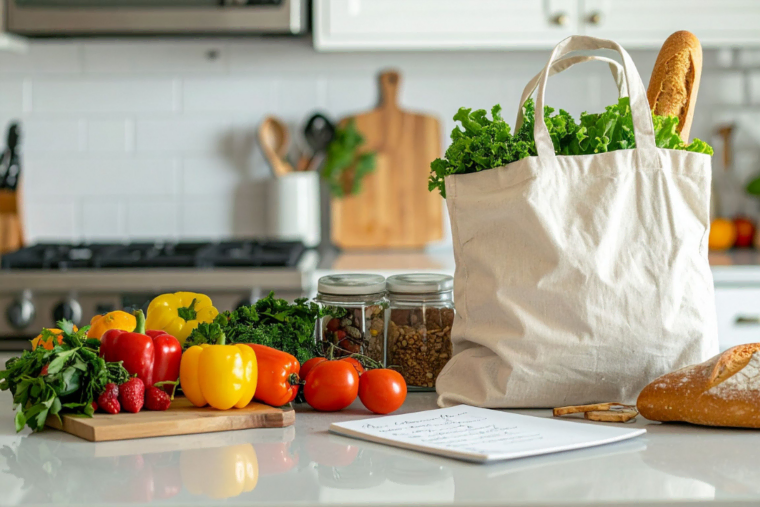
The Grocery List
This is the base of everything.
Costco/Bulk Store
Rotisserie Chicken
Easy bulk protein for salads, wraps, bowls, and quick lunches.
Frozen Organic Chicken Breasts
Lean, versatile, and easy to batch cook for the week.
Grass-Fed Ground Beef
Iron-rich and great for taco bowls, burgers, or high-protein pasta.
Wild-Caught Salmon
Omega-3 support + high-quality protein for metabolic health.
Shrimp
Quick-cooking protein that works for stir-fry or rice bowls.
Frozen Turkey Burgers
Simple, clean option for fast dinners.
Eggs
Complete protein. Affordable. Essential.
Egg Whites
Easy way to boost protein in scrambles without excess fat.
Grocery Store
Fresh Chicken Thighs
Higher fat, more flavor, great for balanced meals.
Grass-Fed Steak
Iron, creatine, high bioavailable protein.
Nitrate-Free Turkey Slices
Easy lunch protein for wraps and snack plates.
Wild Tuna
Quick protein for busy days.
This section is the foundation.
Everything else builds on this.
Clean Refrigerated Protein
These are daily staples.
Plain Greek Yogurt (Low Sugar)
High protein, probiotic support, easy breakfast base.
Cottage Cheese
Casein protein = slow digestion, great for muscle support.
Fairlife Milk
Higher protein, lower sugar than traditional milk.
Organic String Cheese
Simple, portable protein for kids and adults.
High-Protein Yogurt Drinks (Minimal Additives)
Convenient option when on-the-go.
What I look for on labels:
- Low sugar
- Minimal preservatives
- No seed oils when possible
- Short ingredient lists

Convenience Protein (Because Real Life Happens)
This is where affiliate density increases — but still clean.
These are not replacements for whole foods.
They’re support.
Clean Protein Bars
Best for: travel, long workdays, emergency snacks.
Look for minimal ingredients and at least moderate protein content.
Recommended:
Beef Sticks
Great for car snacks and soccer games.
Look for grass-fed and no added nitrates.
Protein Chips
Occasional swap when craving crunchy snacks.
Hard-Boiled Egg Packs
Costco lifesaver for busy weeks.
All of these fit my “mostly whole food” philosophy.
Foundation first.
Convenience supports consistency.
Family-Friendly High Protein Options
Pinterest gold right here.
Protein Pancake Mix
Weekend breakfast upgrade that adds protein without changing flavor.
Chia Seeds
Fiber + protein support.
Hemp Seeds
Great topping for yogurt and smoothies.
High-Protein Pasta
Easy dinner swap for family meals.
Cottage Cheese in Scrambled Eggs
Creamy texture + extra protein.
Protein Smoothies My kids are a huge fan and my husband and I drink one every day!
Here’s what I use:
→ Protein Powder
→ Collagen
→ High-Speed Blender
→ Shaker Bottle
→ Glass Meal Prep Containers
→ Food Scale
Smoothies are my easiest way to hit protein goals without overthinking.
Amazon Pantry + Kitchen Staples
One sentence each. Function only.
→ Protein Powder – Quick protein boost for smoothies or oatmeal.
→ Electrolytes – Support hydration when training hard.
→ Glass Storage Containers – Makes meal prep realistic.
→ Cast Iron Skillet – Even cooking for meat and eggs.
→ Air Fryer – Crispy protein without excess oils.
→ Slow Cooker – Set-it-and-forget-it shredded chicken.
→ Meat Thermometer – Prevent overcooking lean proteins.
→ Freezer Storage Bags – Batch cook and freeze.
→ High-Quality Olive Oil – Avoid seed oils.
→ Insulated Lunch Bag – Keep protein cold on-the-go.
→ Reusable Snack Bags – Reduce waste, prep smarter.
This is how consistency becomes automatic.
How This Grocery List Supports GLP-1 Users
If you’re using GLP-1 support, your appetite may decrease and your portions may naturally shrink — but that doesn’t mean your nutrition matters less. In fact, it matters more. Muscle preservation becomes critical, which is why protein needs to stay a priority. Not less protein. More intentional protein.
This is also where food quality matters. Whole foods will always outperform ultra-processed options, especially when you’re eating smaller amounts. Every bite needs to work for you.
GLP-1 is a tool. It is not the system.
The system is still strength training, high protein intake, balanced meals, and consistency. That foundation does not change.
If you’re looking for where I personally get my GLP-1 support, I use Vyora Wellness — but the real transformation still comes from building sustainable habits around it.
FAQ
How much protein should women eat for muscle gain?
Protein needs vary based on activity level, body size, and goals. A focus on consistent protein intake across meals supports muscle and recovery.
Do you need protein powder?
No. Whole foods are foundational. Protein powder is simply a convenience tool.
Is Costco good for clean protein?
Yes. Costco offers bulk whole-food proteins like salmon, chicken, eggs, and grass-fed beef.
Can you build muscle while on GLP-1?
Yes — when strength training and protein intake are prioritized intentionally.
Are protein bars unhealthy?
Some are ultra-processed. Look for short ingredient lists and minimal added sugars.
What’s better: whole food or supplements?
Whole foods should be the foundation. Supplements support consistency.
Final Thoughts
This list is not extreme.
It’s not restrictive.
It’s realistic.
If you want the full system I use to build balanced meals around this list — that’s exactly what we teach inside Body Confidence.



 Previous Post

Comments